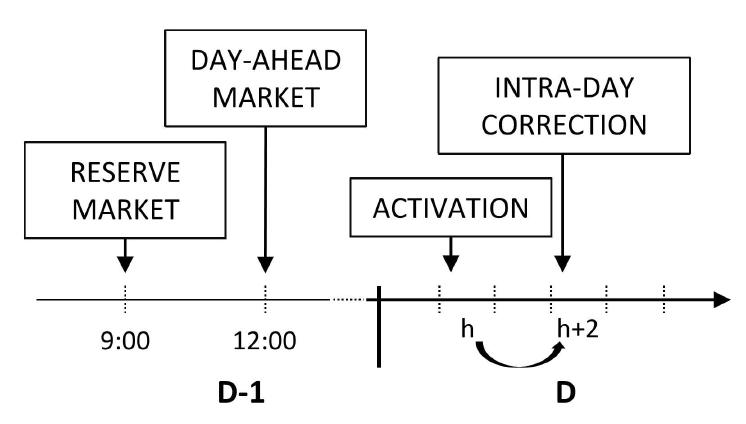
Battery energy storage systems (BESS) can provide fast, bidirectional flexibility and participate across multiple market layers. This paper develops and compares two optimization models for joint day-ahead energy and reserve market participation. The strict model requires the BESS to always be able to deliver the full reserve it offers, while the intraday-correction model allows reserve activation to be corrected on the intraday market. Using realistic day-ahead prices and representative reserve payments, we quantify how intraday correction changes optimal reserve offers, state-of-charge trajectories, and revenue composition. Results show that allowing intraday correction relaxes the effective energy constraint, increases feasible reserve provision in specific hours, and improves overall profitability.