Goal
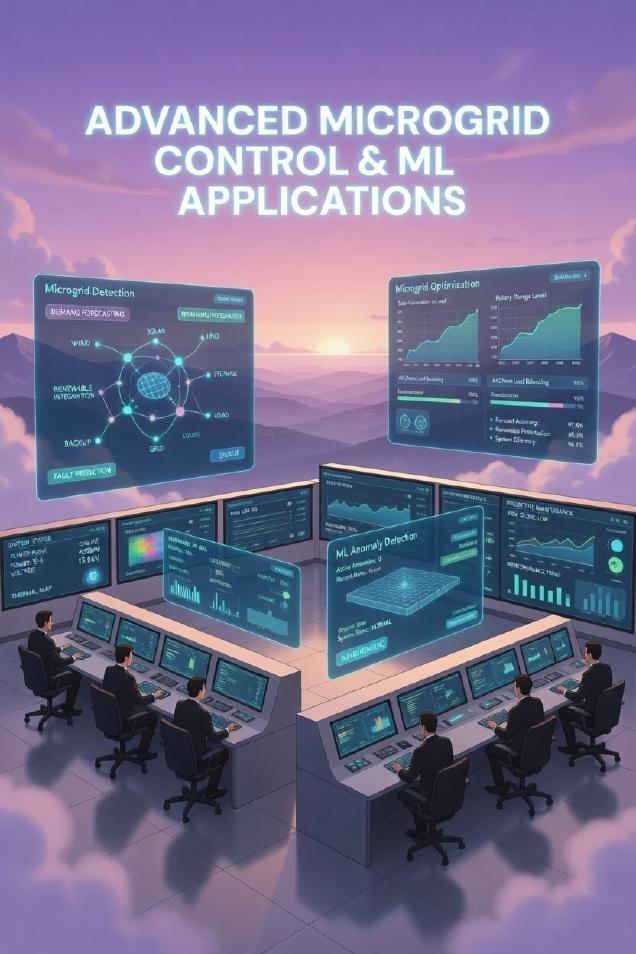
The objective of this work package is to develop control algorithms and artificial intelligence–based forecasting tools for the optimal operation and coordination of flexibility resources in modern power systems. The focus will be on Battery Energy Storage Systems (BESS), Electric Vehicles with Vehicle-to-Grid capability (EV/V2G), and electrolysers, both as individual units and as aggregated resources.
The goal is to design control strategies that enable these technologies to efficiently provide valuable grid services such as frequency regulation, voltage support, peak shaving, and energy arbitrage, while respecting their technical constraints and minimizing operational costs and degradation. In parallel, advanced forecasting models based on AI and machine learning will be developed to predict different market signals.
By combining predictive control approaches with accurate forecasting tools, this objective aims to improve the reliability, responsiveness, and economic performance of flexibility resources. The resulting algorithms will enable coordinated operation of distributed energy resources and support their effective participation in future smart and flexible energy systems.
Methods
To achieve this objective, the project will combine model-based control design, artificial intelligence methods, and coordinated control strategies.
The project will develop advanced control and forecasting tools for flexibility resources using three main approaches. First, Model Predictive Control (MPC) algorithms will be designed for individual resources such as BESS, EV/V2G chargers, and electrolysers, enabling optimal operation and provision of grid services while respecting operational constraints and minimizing costs and degradation.
Second, artificial intelligence and machine learning methods will be used to develop short-term forecasting models for renewable generation, electricity demand, and potentially market prices. These forecasts will provide key inputs for predictive control and improve the scheduling and dispatch of flexibility resources.
Finally, coordinated control and aggregation strategies will be developed to manage fleets of distributed resources. Hierarchical or distributed control architectures will enable scalable and reliable coordination, while aggregation algorithms will combine the flexibility of many small resources to provide grid-level services and support participation in electricity markets.